
Finding Sun Valley Resident Records
Sun Valley is an unincorporated Washoe County community. Its useful record trail therefore starts with county and state custodians instead of a city clerk. Begin with the kind of fact being checked. A parcel search is strongest when an address or titled owner is known. A court index is a name-and-case trail. Election tools confirm an individual registration. Old household work often begins at the Downtown Reno Library or UNR collections.
Official sources answer narrow questions. An assessor card may identify a current owner or trustee, but not every person at the property. A deed can connect parties and dates, but it is not proof of current residence. Preserve the source, date, and matching field. That habit prevents a common-name hit, an old mailing address, or a nearby Reno record from being turned into a Sun Valley match.
- Record the known name, address, date range, middle initial, or parcel number.
- Use the Assessor for a property lead and keep the APN and last document date.
- Check the appropriate name index, such as court Case Inquiry or the Recorder search.
- For a past household, request the library directory year nearest the event.
- Send a focused request to the custodian when the public portal stops.
Sun Valley Record Custodians
These offices maintain the main record sets used for Sun Valley research. The Recorder preserves recorded instruments and marriage certificates. The Assessor provides the parcel pivot that makes an address useful. The Registrar manages registration and election data. Each has distinct copy, confidentiality, and correction rules, and none is a complete list of everybody in the community.
Washoe County Recorder
1001 E Ninth Street, Building A, Rooms 140/150
Reno, NV 89512
775-328-3660
Washoe Registrar of Voters
1001 E Ninth Street, Building A, Room 135
Reno, NV 89512
775-328-2003
Note: A Reno mailing line does not by itself make a parcel or case a City of Reno record, because Sun Valley is in unincorporated county jurisdiction.
Sun Valley Address Pivots
The Washoe County Assessor Property Search is the practical start when an address is known. Its documented modes include APN, street or address, owner, and Assessor Book/Page. A row can be sorted by APN, situs, owner, or last document date, then linked to WRMS and a parcel map. The parcel card distinguishes the physical situs from a separate owner or trustee mailing address and adds legal descriptions, permits, transfers, values, and map references.
| Search field | Use | Limit |
|---|---|---|
| APN | Find a specific county parcel | Historic parcel configurations may change |
| Street or situs | Review address-based rows | Use a number to narrow a long street |
| Owner | Find a titled interest | A percent wildcard supports name variants |
| Book/Page | Map-oriented research | Live control detail was not fully exposed |
A parcel is land, not a household roster. The Assessor describes its information as assessment data that may be incomplete. Building and zoning details need confirmation from the proper county department. A mail address can identify a trust, business, attorney, or owner who lives elsewhere, so it is a lead rather than an occupancy conclusion.
The Assessor property search supplies the address pivot for a Sun Valley residents directory inquiry.
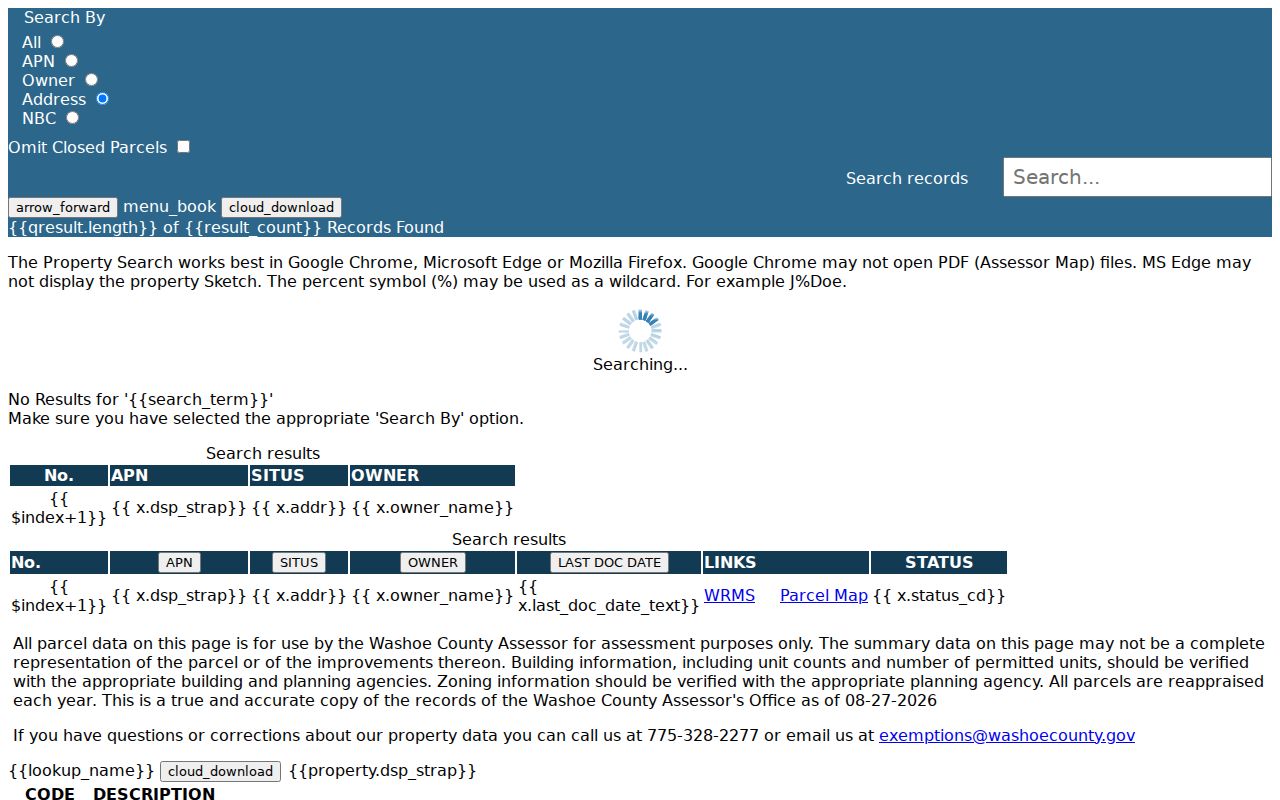
The visible APN, situs, owner, and document-date columns are the details worth carrying into the next official search.
Sun Valley Situs and Mail
A Sun Valley card can show a situs and a mail address. Situs is the physical parcel or building location. The mail field is where tax or ownership correspondence goes, and it can be out of state or connected to a trustee. Legal description, subdivision, and map references are often stronger continuity clues when a postal line changes.
This matters in estate, seller, and house-history work. A matching mail address supports a lead about the titled owner but does not establish who lives at the site. One parcel can also contain several addresses while a county display presents just one. Record both fields with the page date.
- Parcel
- A county-defined piece of land identified by an APN.
- Situs address
- The physical address used for a parcel or building.
- Mail address
- The contact address used for tax or ownership correspondence.
- Legal description
- Land-identifying text used in deeds, maps, and related records.
Current Sun Valley Record Sources
Each present-day source covers a different relationship to Sun Valley. Property and recorded-document records focus on ownership and parties. Election sources provide limited registration evidence under Nevada rules. Court indexes show filed cases. Civic materials preserve dated participation or local issues. Use the source that matches the question instead of combining them into a single resident roll.
| Source | What it confirms | Custodian | Access |
|---|---|---|---|
| Assessor card | Owner or trustee, situs, APN, transfers | Washoe Assessor | Public property portal |
| Recorder index | Parties, instruments, and dates | Washoe Recorder | ICRIS name/date search |
| Voter lookup | Individual registration result | Nevada SOS | Name, DOB, and identifier |
| Court index | Caption, case number, events | Second Judicial District Court | Public inquiry and requests |
| CAB archive | Dated public civic context | Sun Valley CAB | Agendas and minutes |
Renters and other household members may not appear in a property roll. Protected voter addresses, sealed court material, restricted vital records, DMV information, and utility accounts are not open resident sources. A dated record can be useful without being a complete picture of a household.
Sun Valley Recorder Searches
The Recorder’s official search rules are central to Sun Valley title work. ICRIS uses a party name and approximate date. It cannot search directly by address, legal description, or APN. Enter a party as last name, a space, then first name, without a comma. Use the Assessor first to obtain an owner, transfer date, or document clue, then search the party and date.
Online real-estate indexing starts in November 1991, and online images start August 16, 1999. Earlier work shifts to Recorder books and microfiche, counter help, and historical repositories. A grantor transfers an interest and a grantee receives it. Following the roles backwards is a dated deed trail, not proof that either party occupied the property.
Washoe County’s public-record request portal is the fallback for a focused county request outside a specialized index.
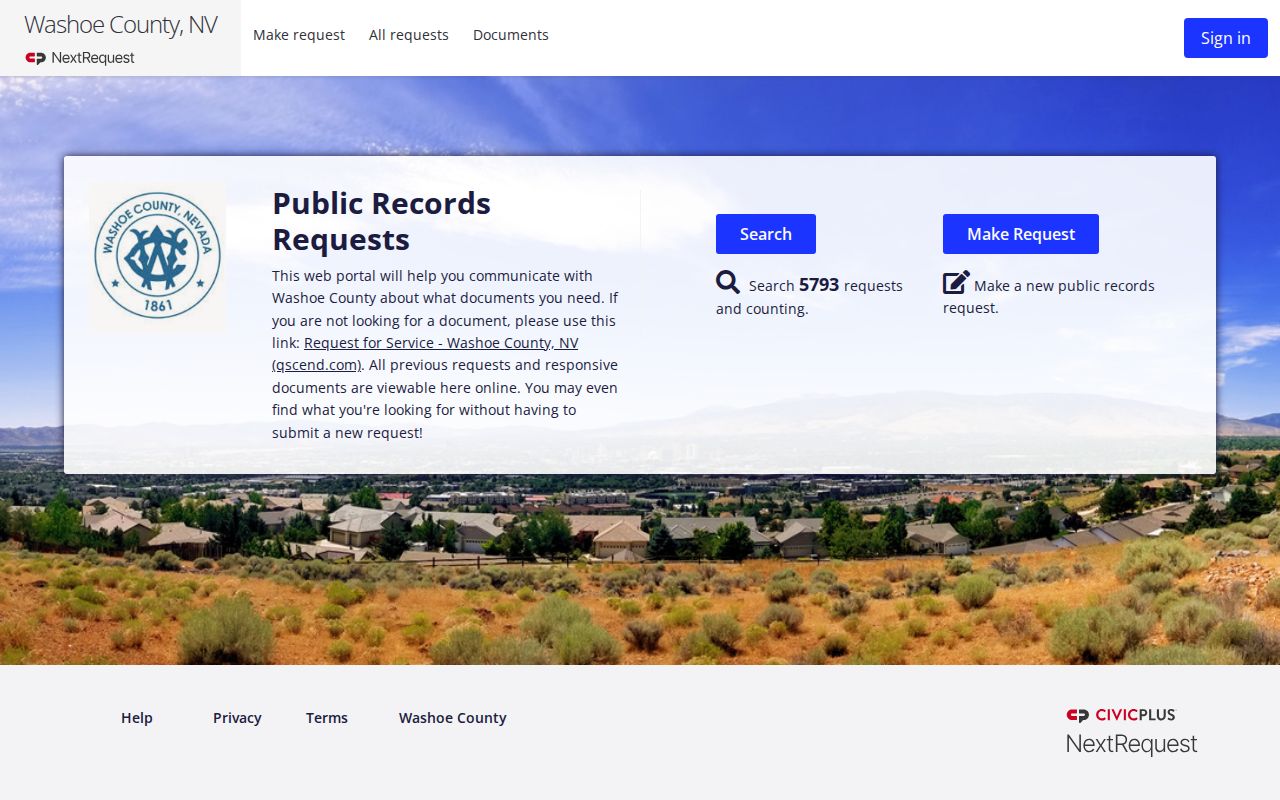
The county request route is most useful when the requester can name the department, time span, APN, case number, or document needed.
Sun Valley Voter Confirmation
Nevada My Voter File is intended to confirm a registered voter, not to browse a Sun Valley street or ZIP roster. Its documented fields are first name, last name, date of birth, and either Nevada driver-license or ID information or the last four of an SSN. The return can include registration status, voting locations, ballot details, elected officials, and voting history. It does not reveal ballot choices.
Washoe’s Data Transparency initiative publishes dated public files with SHA-256 hashes so a downloaded file can be checked against the county’s published hash. Protected identifiers and protected addresses are excluded. A registration result can support an administrative confirmation, but it should not be treated as proof of current physical presence.
Nevada My Voter File is the individual confirmation route for a Sun Valley resident lookup.
The visible identity requirements explain why the state form is not a public by-street directory.
Sun Valley Court Indexes
The Second Judicial District Court is the county trial court for Washoe communities. Its published path is homepage, Case Inquiry, then PERSON, COMPANY, or DETAILED CASE SEARCH. A result leads through a blue case-number link to event and docket-entry information. Party caption, case number, case type, and filing dates can help separate same-name candidates.
Some documents are unavailable even where a docket remains public. Sealed, juvenile, adoption, and confidential matters have access limits. Court jurisdiction follows where a case was filed, not merely a Sun Valley postal line. A case hit does not establish someone’s current address. Verify payment demands with the court’s published contact rather than a caller or text.
Second Judicial District Court provides the Case Inquiry entry point for the county.
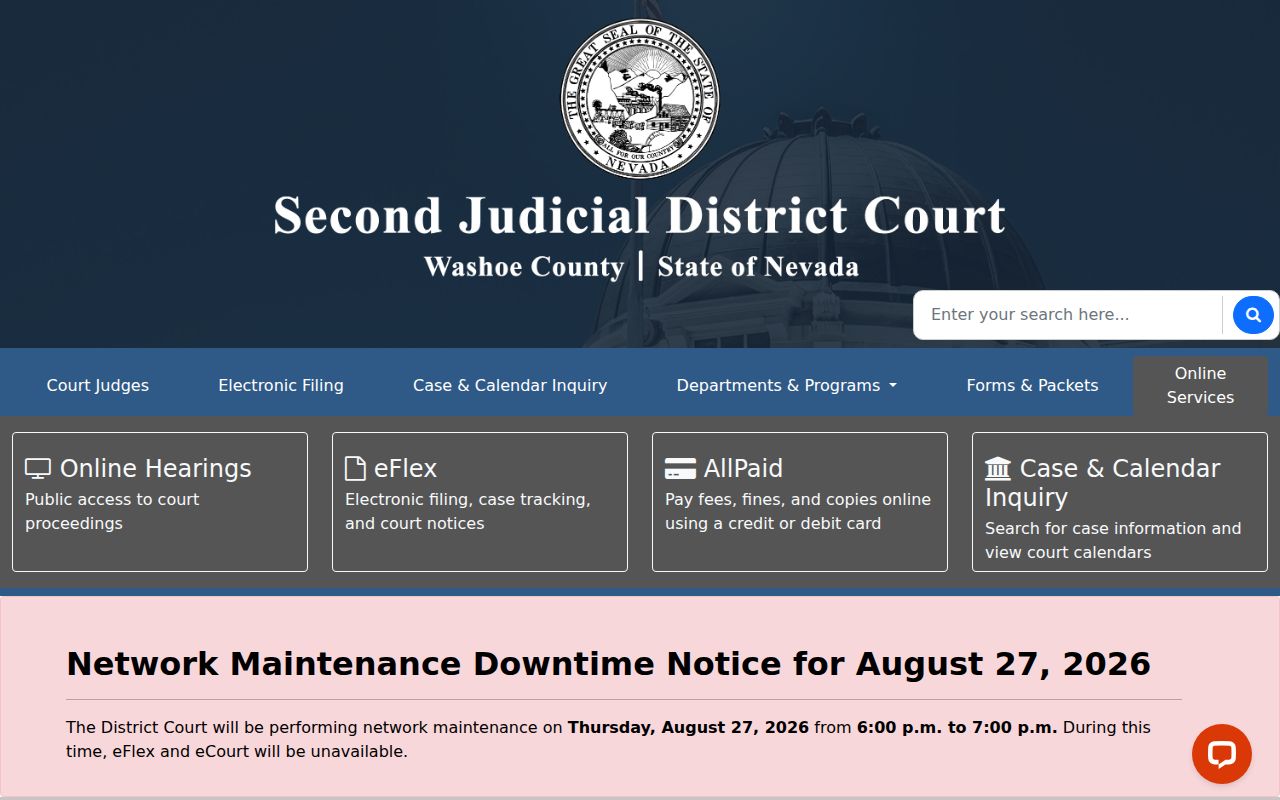
The official court page is a starting point for a public case index, not a shortcut around protected files or an identity conclusion.
Sun Valley Vital Paths
Birth, death, marriage, and divorce records use different custodians. Nevada Office of Vital Records and the Washoe County Health District handle birth and death paths. The Washoe County Clerk issues a marriage license, while the Recorder handles a recorded marriage certificate. A divorce decree comes from the court that granted it. Nevada law generally sets public-release treatment at 125 years for births and 50 years for deaths, while certified copies require a qualified applicant or direct tangible interest.
An obituary, directory, or newspaper can supply a name spelling, date, or relationship lead. It cannot bypass a certificate’s eligibility rules. State verification is available for some records and periods, but a verification is not the same as a certified county certificate or court decree.
Sun Valley Library Evidence
Libraries provide a different kind of Sun Valley evidence. Downtown Reno Library holds local city directories, telephone books, clipping files, newspaper microfilm, and an obituary index. Its staff-assisted directory and telephone search accepts names, dates, and any known address portion. The library’s Reno newspaper obituary index covers citations from mid-1962 through September 2007, while ProQuest access with a library card reaches Reno Evening Gazette issues from March 28, 1876 through September 30, 1983 and Reno Gazette-Journal issues from September 1, 1984 to the present.
The source should control the conclusion. A newspaper notice can place a name, event, or organization at a date. A directory can associate a household with a printed address in its publication year. Neither proves a person’s current residence. Preserve exact initials, street wording, apartment notation, and the publication date. Test surname variants instead of collapsing similar names into one person.
UNR Digital Special Collections adds early regional directories beginning in 1900 and yearbooks that can support family-history or former-classmate research. The Nevada Historical Society has maps, telephone books, yearbooks, and clipping files, but its Research Library remains closed through December 2026. Its research-request route can still be useful when an online search ends. This practical difference makes the library and UNR the first historical stops during the closure. The library’s public microfilm readers can print or save a result to a flash drive, while a research request can be better for a tightly described archival question. Record the repository, collection, newspaper title, and date with every historical lead.
Past Sun Valley Directories
Historical Sun Valley research reaches beyond a city boundary. UNR Digital Special Collections has early Reno, Sparks, and surrounding-area city directories beginning in 1900. Downtown Reno Library holds current and historical directories, telephone books, newspaper microfilm, and obituary-index assistance. Library staff ask for names, dates, an address portion, and contact information when searching the directory or telephone collections.
A reverse or criss-cross directory starts from an address, although the exact local year run should be confirmed before relying on it. The Nevada Historical Society holds maps, telephone books, and early statewide material, but its Research Library is closed for renovation through December 2026 and accepts research requests. Compare directory years with the nearest public federal census year and preserve the printed address format.
The historical shelves are covered in the Sun Valley city directory collections, while the current address chain belongs on the Sun Valley streets page.
Sun Valley ZIP Boundaries
ZIP 89433 is the primary postal ZIP associated with Sun Valley in the reviewed material. It can help normalize an address, but it is not a municipal line or a resident list. USPS supports address, city-and-state, and ZIP-to-city lookups, then warns that a ZIP result does not confirm a person or company at an address. The ZIP can cross political districts.
Use the postal result as a geography check, then return to the Assessor for situs and APN, WRMS for parcel context, and the Recorder for a party-and-date search. Sun Valley’s CDP, ZIP, CAB, GID, precinct, and parcel boundaries overlap without being interchangeable. The county-first route helps keep a record request with the correct office.
Sun Valley Request Fallback
When no specialized portal fits, use Washoe County NextRequest for a defined public-record inquiry. Under Nevada Public Records Act provisions in NRS Chapter 239, an agency must provide an access path, custody referral, or written delay response by the end of the fifth business day. Ask for a record set, date range, APN, case number, meeting date, or document description rather than an open-ended person search.
The county form permits inspection, plain copies, certified copies, and electronic copies. Its general policy lists five cents per paper page and actual electronic-storage cost, while department and statutory schedules can differ. Keep a copy of the request and reply. A narrow request is easier to route and easier to check for completeness. It also produces a clear follow-up trail.
Washoe County’s Registrar page is the election-office starting point used for Sun Valley research.
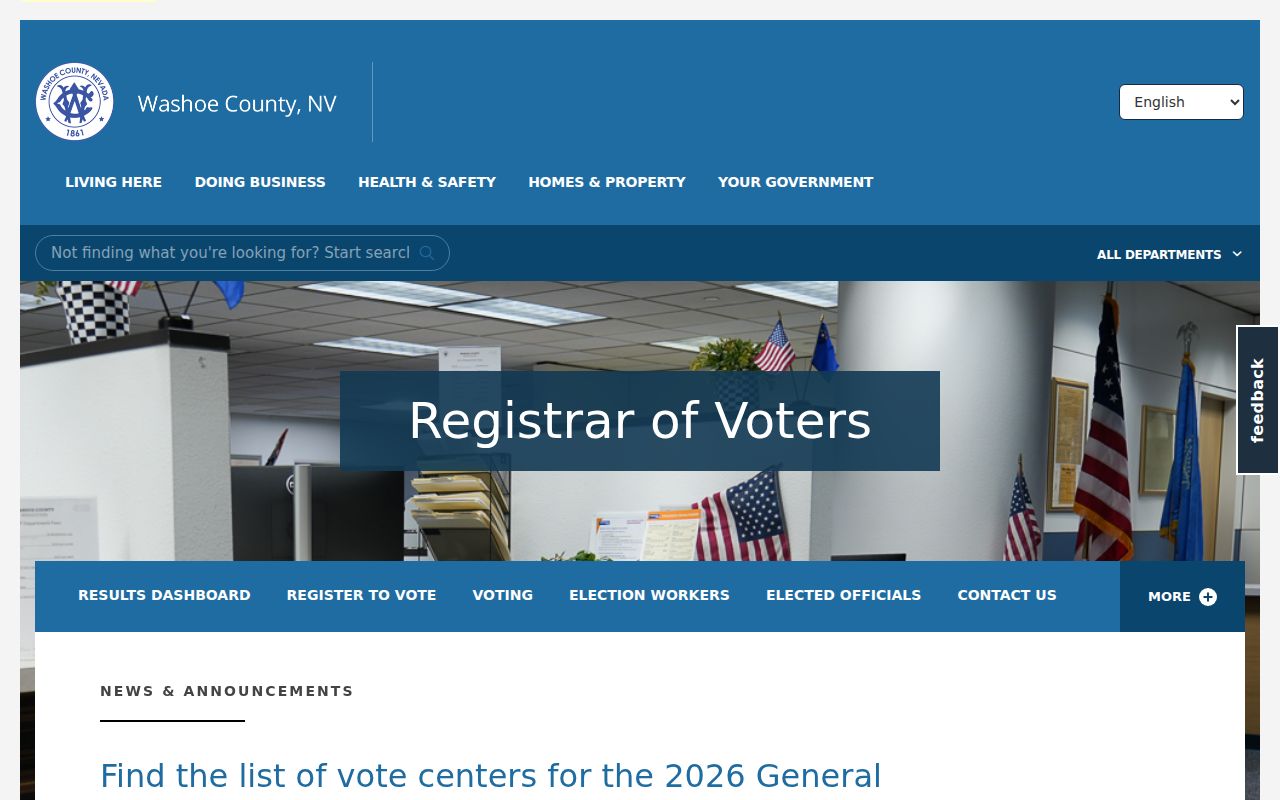
The county page connects registration, election, and data resources while keeping individual confirmation distinct from an open directory.